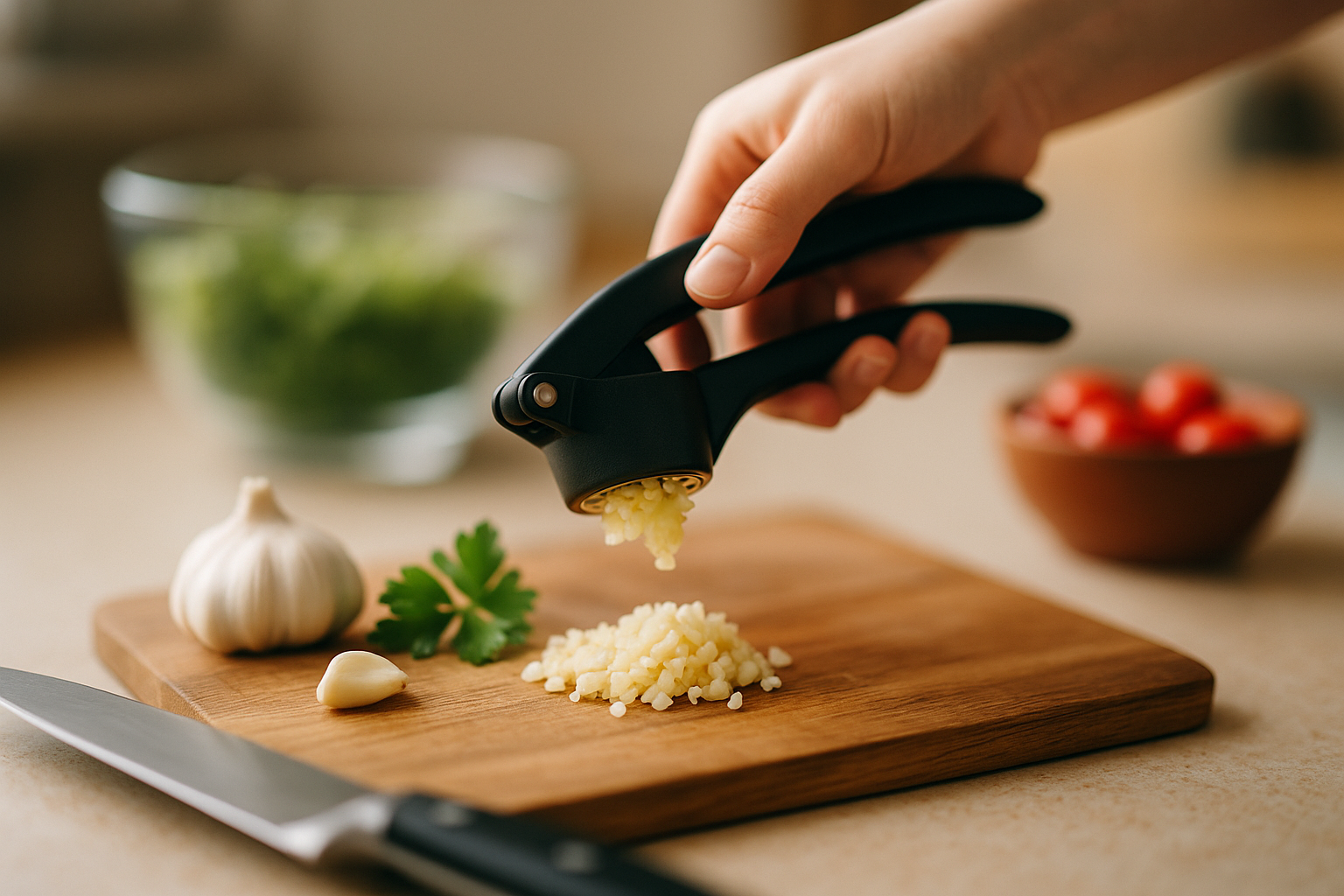
You reach for the garlic press buried in the back of your drawer, only to spend the next five minutes scrubbing stubborn bits of garlic from its tiny holes. Or maybe you’ve watched half an onion turn brown in the fridge because you had no idea how to store it properly. These small kitchen frustrations add up, stealing time and wasting food in ways that seem inevitable. But here’s the thing: they’re not. Simple kitchen hacks can transform these daily annoyances into smooth, efficient processes that make cooking actually enjoyable.
The best kitchen hacks aren’t complicated tricks that require special gadgets. They’re smart solutions using tools you already own, techniques that take seconds to learn but save you hours over time. Whether you’re prepping quick weeknight dinners or tackling more ambitious recipes, these strategies will change how you work in the kitchen. From food storage secrets to prep shortcuts, these are the hacks that make you wonder why nobody told you sooner.
Food Storage Hacks That Stop Waste
That half-used can of tomato paste sitting in your fridge right now is probably growing mold. Instead of dealing with spoiled leftovers, try this: spoon leftover tomato paste into tablespoon-sized dollops on a parchment-lined baking sheet, freeze them, then transfer to a freezer bag. Now you have perfectly portioned tomato paste ready whenever you need it, and nothing goes to waste.
Fresh herbs present another common storage challenge. Most people stick the plastic container in the fridge and watch their basil turn black within days. The solution? Treat soft herbs like flowers. Trim the stems, place them in a glass of water, cover loosely with a plastic bag, and store in the fridge. Your parsley, cilantro, and basil will stay vibrant for over a week. For hardier herbs like rosemary and thyme, wrap them in a slightly damp paper towel before refrigerating.
Onions and garlic deserve special attention too. Never store them in plastic bags, which trap moisture and accelerate sprouting. Instead, keep them in a cool, dark, well-ventilated spot. An old mesh produce bag or even a paper bag with holes punched in it works perfectly. And here’s a crucial detail most people miss: keep onions and potatoes separate. Onions release gases that make potatoes sprout faster.
According to nutrition experts on food preservation, proper storage extends the life of your produce significantly. Leafy greens last longer when stored with a dry paper towel in the container to absorb excess moisture. Berries should only be washed right before eating, never in advance. Cheese stays fresh when wrapped in parchment or wax paper first, then placed in a loose plastic bag, allowing it to breathe while preventing it from drying out.
Prep Work Shortcuts That Save Serious Time
Peeling ginger with a vegetable peeler wastes a surprising amount of the root and takes forever to navigate all those knobs. Switch to a spoon instead. The edge of a regular spoon scrapes off the thin skin perfectly while preserving all the usable ginger underneath. It’s faster, more efficient, and you’ll never go back to the peeler method.
Garlic prep becomes infinitely easier with the right approach. Skip the garlic press entirely and use this professional chef technique: place the flat side of your knife over the garlic clove and give it a firm smack with the heel of your hand. The peel falls right off, and the garlic is already partially crushed. For mincing, a sprinkle of coarse salt on the cutting board provides traction and helps break down the garlic faster as you chop.
Citrus fruits yield way more juice when you know this simple trick: before cutting, roll the whole lemon or lime firmly on the counter with your palm, applying good pressure. This breaks down the internal membranes. Then microwave it for 10-15 seconds. A lemon prepared this way gives you nearly twice as much juice as one squeezed straight from the fridge. If you’re using meal prep strategies, juice several at once and freeze the juice in ice cube trays.
Cutting cherry tomatoes becomes a one-second job instead of a tedious process when you use the lid method. Place a bunch of tomatoes between two plastic container lids (flat side up on bottom, flat side down on top). Hold the top lid gently to keep tomatoes in place, then slice horizontally through the middle with a long, sharp knife. You’ll halve a dozen tomatoes in one smooth motion.
Cooking Techniques You Should Have Learned Years Ago
That pasta water you dump down the drain? It’s liquid gold for creating silky sauces. The starchy water acts as a natural thickener and helps sauce cling to pasta better than any other ingredient. Always save at least a cup before draining your pasta. When combining pasta with sauce, add splashes of this water to achieve that glossy, restaurant-quality finish. The salt in the water also seasons the sauce gradually as it reduces.
Room temperature ingredients matter way more than most recipes let on. Cold eggs don’t emulsify properly in baked goods, leading to dense cakes and tough cookies. Cold butter won’t cream correctly with sugar, affecting texture. Get in the habit of taking eggs, butter, and dairy out of the fridge 30-60 minutes before you start cooking. This single step improves nearly every recipe’s outcome. Research from food science experts confirms that ingredient temperature significantly impacts cooking results.
The way you preheat your pan transforms cooking quality. Most people add oil to a cold pan and then heat it, which is backwards. Heat the pan first until a drop of water sizzles on contact, then add your oil. This prevents sticking and gives you better browning. For proteins especially, a properly heated pan means a beautiful sear instead of sad, gray meat that sticks and tears.
Salt timing changes everything about flavor development. Salting vegetables before cooking draws out moisture, concentrating flavors and improving texture. For eggplant and zucchini, a 15-minute salt rest before cooking prevents that soggy, watery result. For meat, season generously at least 40 minutes before cooking, or right before it hits the pan. The danger zone is 10-30 minutes, when salt draws moisture out but hasn’t had time to be reabsorbed.
Cleanup Hacks That Make Kitchen Maintenance Easy
That crusty baking sheet you’re convinced is ruined? It’s not. Make a paste with baking soda and hydrogen peroxide, spread it over the stains, let it sit for a few hours, then scrub. Even years of baked-on grime comes off. For burned pots, fill them with water, add a dryer sheet, and let it soak overnight. The conditioning agents in the dryer sheet loosen the burned bits so they wipe away easily.
The garbage bowl concept eliminates countless trips to the trash can while prepping. Keep a large bowl on your counter for all your vegetable peels, packaging, and scraps as you cook. When it’s full, make one trip to empty it. This simple system keeps your workspace cleaner and makes prep work flow more smoothly. Professional chefs use this method in every kitchen.
Wooden cutting boards absorb odors and stains, but you don’t need special cleaners. After washing, while the board is still damp, sprinkle it generously with coarse salt and scrub with half a lemon. The salt acts as a gentle abrasive, the lemon’s acid neutralizes odors, and the natural oils condition the wood. Rinse, dry thoroughly, and your board looks and smells new. Do this monthly to maintain your boards properly.
For the microwave, stop scrubbing splattered food. Instead, fill a microwave-safe bowl with water and a few tablespoons of white vinegar. Microwave on high for 5 minutes. The steam loosens everything, and you can wipe the interior clean with zero effort. This works even on that mysterious crusty stuff that’s been there for months.
Tool Hacks Using What You Already Own
Your stand mixer is more versatile than you realize. That paddle attachment? It’s perfect for shredding cooked chicken. Toss warm chicken breasts in the bowl and run it on low for 30 seconds. You’ll have perfectly shredded chicken without the hand-cramping work of using two forks. This same technique works for making mashed potatoes, though don’t overmix or they’ll get gluey.
Dental floss cuts soft foods better than a knife ever could. Cheesecake, soft cheese logs, cinnamon rolls, and layer cakes all slice cleaner with unflavored dental floss. Hold the floss taut, press down through the food, and you get perfect, clean cuts without dragging or smashing. This is how professionals get those Instagram-worthy cake slices.
Your waffle iron isn’t just for breakfast. It makes perfectly crispy hash browns, cooks bacon without splattering grease everywhere, and turns canned biscuit dough into quick personal pizzas. The even heat from both sides means faster cooking and better browning. Insights from creative kitchen experts show that repurposing common tools expands your cooking capabilities without cluttering your kitchen.
Ice cube trays do way more than freeze water. Use them to portion and freeze leftover wine for cooking, herbs in olive oil for quick flavor additions, leftover coffee for iced coffee drinks, and pesto for easy pasta additions. Each cube is typically 2 tablespoons, giving you automatic portion control. Label bags with contents and date, and you’ve created a system that reduces waste and speeds up future meal prep.
Ingredient Substitution Secrets
Running out of buttermilk in the middle of a recipe doesn’t require a store run. Add one tablespoon of white vinegar or lemon juice to a cup of regular milk, stir, and let it sit for 5 minutes. The acid curdles the milk slightly, creating the tang and texture buttermilk provides in baking. This substitute works identically in pancakes, biscuits, and cakes.
No brown sugar? Mix a cup of white sugar with one tablespoon of molasses and stir thoroughly. It’s chemically identical to store-bought brown sugar. For light brown sugar, use less molasses. This knowledge means you can keep fewer ingredients stocked while still being ready for any recipe.
Fresh herbs can be substituted with dried at a 3:1 ratio, but the reverse works too. If a recipe calls for dried herbs and you only have fresh, triple the amount. Just remember that fresh herbs should be added near the end of cooking to preserve their delicate flavor, while dried herbs benefit from longer cooking times to bloom properly.
Self-rising flour is just all-purpose flour with baking powder and salt already added. For every cup of all-purpose flour, add 1.5 teaspoons of baking powder and 0.25 teaspoons of salt. Mix thoroughly before using. This substitution works perfectly in any recipe calling for self-rising flour, and you’ll save money buying only all-purpose flour. When working on one-pot meals, having reliable substitutions makes cooking more flexible.
Time-Saving Organization Systems
The biggest time-saver in any kitchen is a well-organized system where everything has a designated spot. Store items where you first use them. Mixing bowls near the stand mixer, oils and spices near the stove, cutting boards by the sink. This eliminates the constant searching that adds unnecessary minutes to every cooking session.
Labeling seems obsessive until you try it. Use a label maker or painter’s tape and a marker to date everything in your freezer and pantry. You’ll stop wondering if that mystery container is safe to eat, prevent food waste, and use items in the proper order. This simple system pays for itself in reduced waste within a month.
Vertical storage multiplies your usable space. Install a magnetic knife strip to free up counter and drawer space. Use shelf risers in cabinets to create two levels of storage. Hang pots and pans from a ceiling rack or wall-mounted hooks. The less you stack things, the easier everything becomes to access and put away.
Create cooking zones in your kitchen based on tasks. A prep zone with cutting boards, knives, and a bowl for scraps. A cooking zone with oils, spices, and utensils within arm’s reach of the stove. A baking zone with measuring cups, mixing bowls, and baking ingredients grouped together. This restaurant-style organization makes every cooking task flow more logically and efficiently.
These kitchen hacks share one important quality: they’re all incredibly simple, yet most people cook for years without discovering them. Start implementing just a few of these strategies, and you’ll notice immediate improvements in how smoothly your kitchen runs. The garlic you peel will take seconds instead of minutes. The herbs you buy will last weeks instead of days. The cleanup you dread will become manageable. Small changes accumulate into major improvements in your daily cooking experience, proving that the best kitchen wisdom often comes from the simplest solutions.

Leave a Reply