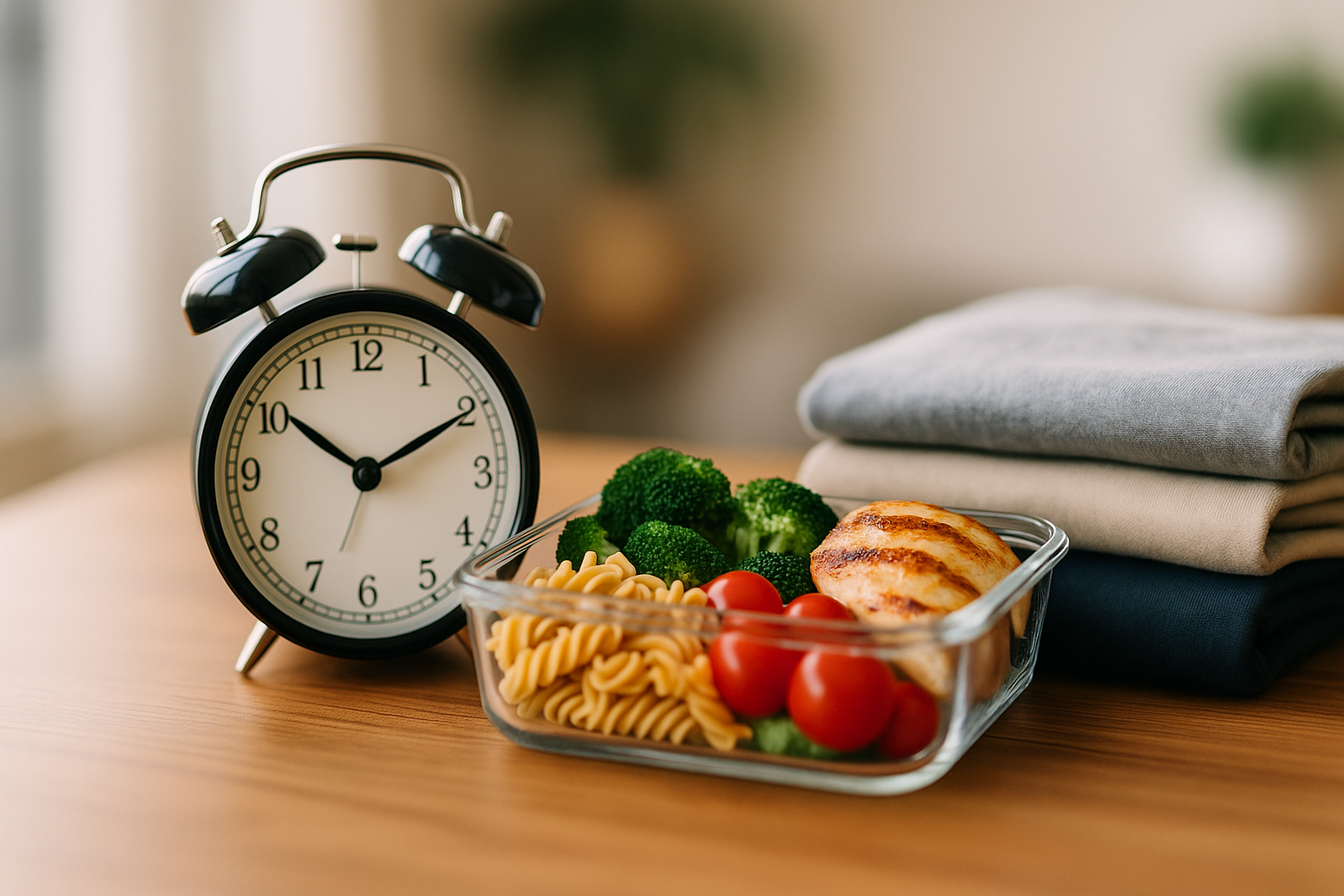
You check your phone at noon and realize you’ve already spent an hour on tasks that should have taken fifteen minutes. Your to-do list keeps growing while your time keeps shrinking. Sound familiar? The truth is, most people lose 10-15 hours every week to inefficiencies they don’t even notice – small time drains that compound into massive productivity losses.
These aren’t the typical “wake up at 5 AM” or “batch your emails” tips you’ve heard a thousand times. These are the unconventional, tested strategies that address the hidden time-wasters lurking in your daily routine. Implement even half of these life hacks, and you’ll reclaim hours you didn’t know you were losing.
The Two-Minute Drawer Rule
Every time you open a drawer, cabinet, or closet and have to dig through clutter to find what you need, you’re wasting precious seconds that multiply into hours over weeks and months. The two-minute drawer rule is simple: if you find yourself searching for something in a storage space, spend exactly two minutes organizing that space immediately after finding your item.
This approach works because it spreads organization into tiny, manageable chunks instead of requiring a massive decluttering session you’ll never actually do. You’re already at the drawer with the item in hand – those extra two minutes have virtually no opportunity cost. Over time, your most-used spaces naturally become optimized because you organize them right when the pain of disorganization is fresh in your mind.
Apply this to your digital life too. When you waste time hunting for a file on your computer, spend two minutes organizing that folder immediately. Can’t find an email? Two minutes setting up a filter or folder. The pattern of organizing at the point of pain creates sustainable systems without requiring dedicated organization time.
Reverse Your Morning Routine
Most people structure their mornings in the worst possible sequence: wake up, check phone, shower, get dressed, make breakfast, then finally start their day already depleted. This order guarantees you’ll start every day reactive instead of proactive. Research shows that successful people structure their mornings strategically to protect their peak mental energy.
Try this instead: wake up, immediately tackle your single most important task for fifteen minutes (before showering, before breakfast, before anything), then proceed with your normal routine. This “important task first” approach means that even if your entire day derails, you’ve already made progress on what matters most. You’re using your freshest mental energy on high-value work instead of burning it on autopilot activities.
The psychological benefit is massive. Starting your day with progress creates momentum and confidence that carries through everything else. You’ll find yourself less stressed during breakfast because you’ve already won the day. If you’re looking for more ways to build better daily patterns, our guide on life-changing habits offers additional strategies that compound over time.
The Meal Prep Shortcut Nobody Talks About
Traditional meal prep advice tells you to spend three hours every Sunday cooking a week’s worth of meals. That’s unrealistic for most people and creates an all-or-nothing situation where you either meal prep perfectly or not at all. Here’s the better approach: prep ingredients, not meals.
Spend 30 minutes washing and chopping vegetables, cooking a big batch of rice or quinoa, and preparing protein (grilled chicken, hard-boiled eggs, or roasted chickpeas). Store everything in clear containers. Now, instead of staring into your fridge wondering what to make, you can assemble fresh meals in under five minutes by mixing and matching prepped components.
This system is flexible – you’re not locked into eating the same meal four days in a row. It’s also faster to execute and easier to maintain than full meal prep. For specific recipes that work perfectly with this approach, check out resources on meal prep for busy professionals and quick weeknight dinners that take advantage of pre-prepped ingredients.
The time savings are substantial. Most people spend 15-20 minutes per meal on prep alone, not including cooking. With ingredient prep, you’re down to 5 minutes assembly time. Across breakfast, lunch, and dinner for a week, that’s saving you nearly 10 hours weekly.
Strategic Decision Elimination
Decision fatigue is one of the biggest hidden time-wasters in daily life. Every choice you make – even tiny ones like “what should I wear?” or “which route should I take?” – depletes mental energy and wastes time. The solution isn’t willpower. It’s eliminating decisions entirely through predetermined defaults.
Create decision rules for recurring choices. For example: “I always work out at 6 AM on weekdays” removes the daily decision of when to exercise. “I wear black pants and a blue shirt every Monday and Wednesday” eliminates morning wardrobe deliberation. “I always take the highway to work” removes route decisions. These might seem rigid, but productivity experts confirm that reducing daily decisions preserves mental energy for important choices.
The key is identifying which decisions you make repeatedly and creating automatic defaults. Track your day for one week and note every time you pause to make a choice. You’ll be shocked how many tiny decisions clutter your day. Then systematically create rules that eliminate the need to choose.
This works for meal planning too. “Taco Tuesday” isn’t just cute – it’s decision elimination. When you know Tuesday dinner is always tacos, you’ve removed one decision per week, eliminated a grocery shopping question, and created a reliable pattern that requires zero mental energy.
The Single-Touch Email System
Most people read emails multiple times: once when the notification appears, again when they actually check email, and a third time when they finally respond. This triple-handling wastes hours weekly. The single-touch system is ruthlessly simple: every email gets handled exactly once.
When you open an email, you have three options: respond immediately (if it takes under two minutes), schedule it as a task with a specific time block, or delete/archive it. That’s it. No “marking as unread” to deal with later. No leaving it in your inbox as a reminder. No reading it just to see what it says. One touch, one decision, done.
This requires shifting your email habits. Instead of checking email constantly throughout the day, process it in two or three dedicated sessions. During processing time, you’re not just reading – you’re acting. This prevents the time-wasting cycle of re-reading the same messages and trying to remember what you need to do about them.
The combination of batched processing and single-touch handling typically saves 5-7 hours per week for people who handle moderate email volume. You’re eliminating both the constant interruption of notifications and the redundant work of handling messages multiple times. If you struggle with maintaining focus during these sessions, learning strategies for staying consistent can help you stick to this system even when motivation dips.
The Waiting Time Toolkit
The average person spends 40-60 minutes daily waiting: for appointments, in lines, for meetings to start, for your computer to update. Most people scroll social media during these gaps, turning dead time into wasted time. Instead, create a waiting time toolkit – a predetermined list of valuable micro-tasks you can complete in 5-10 minute chunks.
Your toolkit might include: clearing out your phone’s photo gallery, reviewing and updating your shopping list, doing a quick stretching routine, listening to a podcast at 1.5x speed, or processing quick emails. The key is having these tasks predetermined so you don’t waste the waiting time deciding what to do with the waiting time.
Keep your toolkit accessible. Use your phone’s notes app, a small notebook, or a task management app. When unexpected waiting time appears, you simply pull up your toolkit and knock out a task. According to time management experts, this approach transforms dead time into productive time without requiring any additional hours in your day.
This also reduces the anxiety of waiting. Instead of getting frustrated about a delayed appointment, you’re making progress on something useful. The psychological benefit of feeling productive during otherwise wasted moments compounds into better mood and reduced stress throughout your day.
The Night-Before Protocol
Your evening routine determines your morning success more than your morning routine does. Most people wake up and immediately start making decisions and solving problems: what to wear, what to eat, what to work on first. This creates morning chaos and depletes willpower before your day even starts.
The night-before protocol is simple: spend ten minutes each evening setting up tomorrow for success. Lay out your clothes. Pack your bag. Prep your breakfast or set out everything you need to make it. Write down your three most important tasks for tomorrow. Check your calendar and prepare any materials you need for meetings or appointments.
These ten minutes in the evening save 30-40 minutes the next morning by eliminating decision-making and scrambling. You wake up to a day that’s already partially organized, allowing you to move through your morning on autopilot. Your brain can stay in a calm, focused state instead of immediately jumping into problem-solving mode.
The compound effect is significant. Over a five-day work week, you’re investing 50 evening minutes to save 150+ morning minutes – a 3x return on your time investment. Plus, morning minutes are typically more valuable than evening minutes because your mental energy and willpower are highest early in the day.
Embrace Strategic Incompleteness
Perfectionism is a massive time-waster disguised as quality control. Most tasks don’t require 100% completion to deliver 90% of their value. Learning to strategically leave things incomplete – stopping at “good enough” rather than “perfect” – can reclaim hours every week.
This doesn’t mean doing sloppy work. It means understanding the point of diminishing returns for each task. Cleaning your kitchen until it’s presentable takes 10 minutes. Cleaning it until it’s spotless takes 45 minutes. The extra 35 minutes often delivers minimal additional value. The same applies to work presentations, email responses, and countless other tasks where perfectionism adds time without adding proportional value.
Practice asking “what’s good enough here?” before starting tasks. For routine emails, good enough might be clear and professional, not perfectly worded. For a work presentation, good enough might be solid content with simple slides, not a design masterpiece. For dinner, good enough might be nutritious and tasty, not Instagram-worthy.
The mental shift from “complete and perfect” to “complete enough to achieve the goal” is liberating. You’ll finish tasks faster, move through your to-do list more efficiently, and have time left over for things that actually matter. Sometimes learning when to say no to perfectionism is just as important as saying no to other people’s requests.
The Batch-and-Burn Approach
Context-switching – moving between different types of tasks – is one of the biggest productivity killers. Every time you switch contexts, your brain needs time to adjust, and you lose momentum. The batch-and-burn approach groups similar tasks together and completes them in focused bursts.
Instead of scattering phone calls throughout your day, batch them into a single 30-minute block. Instead of responding to messages as they arrive, batch all communication into two or three designated times. Instead of doing laundry, dishes, and cleaning at random times, batch all household tasks into one focused session.
This works because your brain can stay in one mode. When you’re in “phone call mode,” making five calls in a row is much faster than making five calls spread across five hours. You’re not constantly shifting mental gears, which preserves energy and increases speed. The same task that takes 10 minutes in isolation might take only 5 minutes when batched with similar tasks.
Start by tracking your tasks for one day and identifying which ones are similar in nature. Then reorganize your schedule to group these tasks together. You’ll find that batching not only saves time but also makes tasks feel less burdensome because you’re building momentum instead of constantly starting fresh.
Transform Your Commute or Create One
If you commute to work, you’re already spending 30-90 minutes daily in transit. If you work from home, you’re missing out on valuable transition time. Either way, optimizing this time can add productive hours to your week without actually adding hours to your day.
For commuters, transform travel time into learning time. Audiobooks, podcasts, and language learning apps turn passive sitting into active development. At 1.5x or 2x speed, you can consume a book per week during your commute. That’s 50+ books per year without dedicating any additional time.
For remote workers, create an artificial commute – a 15-minute walk or drive before and after work. This creates psychological boundaries between work and personal life, preventing the all-day work bleed that remote workers experience. Use this time for the same learning activities commuters use, or simply for mental processing and planning.
The key is intentionality. Commute time isn’t just dead time to endure – it’s an opportunity to invest in yourself while doing something you have to do anyway. This mindset shift transforms a daily frustration into a daily advantage.
These ten life hacks share a common thread: they work with your existing routines rather than requiring you to overhaul your entire life. Start with the two or three that resonate most strongly with your current pain points. Implement them for two weeks until they become automatic, then add another. Small, consistent improvements compound into massive time savings, giving you back hours you can invest in what truly matters – whether that’s advancing your career, deepening relationships, or simply having time to breathe.

Leave a Reply